
The Four Main Yogas of Life
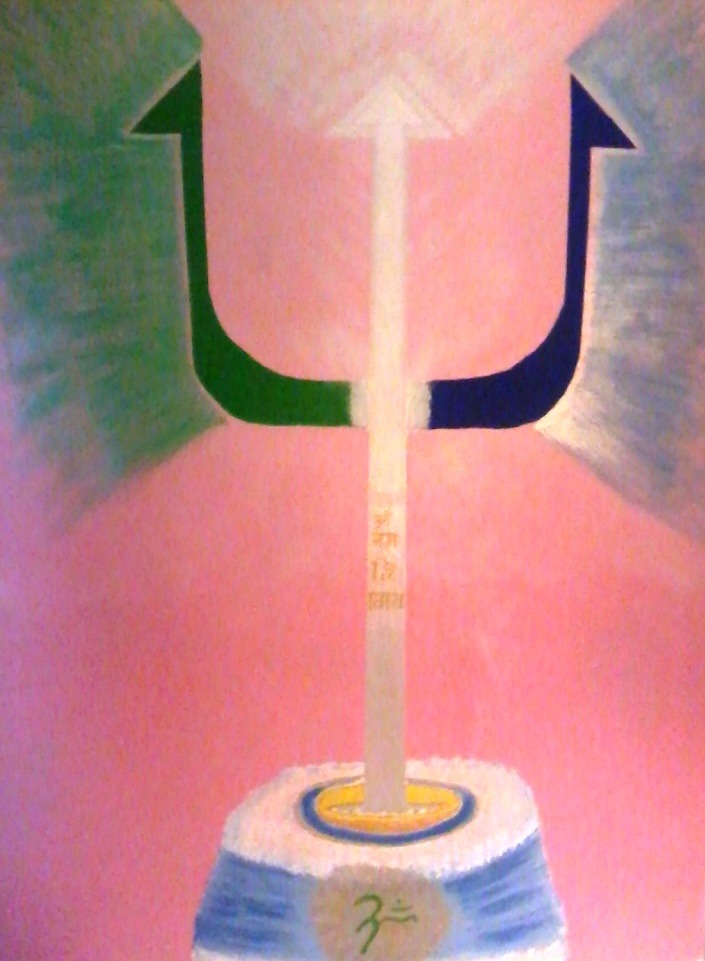



Greetings and Namaste',
The light in me that is me, bows to and acknowledges, the light in you that is you.
Yoga is union.
The Yoga I teach is a scientific method of, symbology and methodology of soul evolution ( growth) involving Bhakti, Karma, Jnana, and Raja Yoga modalities to aid one in their union of by and for the Divine
The purpose of this site is to aid with the invoking and embracing of change, for the betterment of everyone and this planet.
Sincerely,
your Jnandaji
Namaste'.
What are the Four Main Yogas?
I chose to use Swami Sivananda’s Purports on the four yogas because of his thoroughness and concise definitions. - Satguruyogiprabhu
SWAMI SIVANANDA’S PURPORTS ON EACH OF THE FOUR MAIN YOGAS
FOUR MAIN YOGAS OF LIFE
Principles of Karma Yoga
Karma Yoga is one of the four paths of Yoga. On this page are the key components that determine what actions will qualify as being Karma Yoga.
Bhagavad Gita
Karma Yoga is the selfless devotion of all inner as well as the outer activities as a Sacrifice to the Lord of all works, offered to the eternal as Master of all the soul’s energies and austerities."
Right Attitude
It’s not what you do that counts, it’s the attitude while doing it that determines if a job is a karma yoga job, i.e. a liberating job, or a binding job. Work is worship. Swami Sivananda advises us to "give your hands to work, and keep your mind fixed at the lotus feet of the Lord."
Right Motive
Same as attitude. It is not what you do that counts but your real motive behind it. Your motive must be pure. Swami Sivananda says: "Man generally plans to get the fruits of his works before he starts any kind of work. The mind is so framed that it cannot think of any kind of work without remuneration or reward. A selfish man cannot do any service. He will weigh the work and the money in a balance. Selfless Service is unknown to him."
Do Your Duty
Often "duty" is referred to as "righteousness". You will incur demerit if you shun your duty. Your duty is towards God, or Self, or the Inner Teacher who teaches you through all the specific circumstances of your life as they appear.
Do Your Best
Whatever you have to do, do your best. If you know of a better way to serve, you must use it. Do not hold back because of fear of effort or because of fear of criticism. Do not work in a sloppy manner just because no one is watching or because you feel the work is not for you. Give your best. Try to do such actions that can bring maximum good and minimum evil. Do Karma Yoga increasingly.
Give up Results
God is the doer. You are not the doer. You are only the instrument. You do not know God’s intentions or God’s plans. God is the actor. The Self never acts, changes. It is only the "Gunas", the three qualities, which are playing. The way to realize this truth is to constantly work for work’s sake and let go of the results, good or bad. It is the desire for action that binds the individual. It is the detachment from action that will dissolve the karmic seeds. Detachment from results also means detachment from the type of job itself. There is no job that is inferior or superior to a different job. Don’t be attached to your job. Be ready to give up your job if necessary.
Serve God or the Self in All
Do to others what you would like to be done to yourself. Love thy neighbor as thyself. Adapt, adjust, accommodate. Bear insult, bear injury. Unity in Diversity. We are parts of the same body. Practice humility in action. Beware of power, fame, name, praise, censure.
Follow the Discipline of the Job
Each job is a teacher of some sort. You can learn different skills by doing different jobs. Each job has different requirements in terms of time, degree of concentration, skills or experience, emotional input, physical energy, will. Try to do whatever job you are doing well.
Jnana Yoga, The Yoga of Knowledge or Wisdom
This is the most difficult path, requiring tremendous strength of will and intellect. Taking the philosophy of Vedanta the Jnana Yogi uses his mind to inquire into its own nature. We perceive the space inside and outside a glass as different, just as we see ourselves as separate from God. Jnana Yoga leads the devotee to experience his unity with God directly by breaking the glass, dissolving the veils of ignorance. Before practicing Jnana Yoga, the aspirant needs to have integrated the lessons of the other yogic paths - for without selflessness and love of God, strength of body and mind, the search for self-realization can become mere idle speculation.
Bhakti Yoga, The Path of Devotion or Divine Love
This path appeals particularly to those of an emotional nature. The Bhakti Yogi is motivated chiefly by the power of love and sees God as the embodiment of love. Through prayer, worship and ritual he surrenders himself to God, channeling and transmuting his emotions into unconditional love or devotion. Chanting or singing the praises of God form a substantial part of Bhakti Yoga.
The Eight Limbs of Raja Yoga
Compiled by the Sage Patanjali Maharishi in the Yoga Sutras, the Eight Limbs are a progressive series of steps or disciplines which purify the body and mind, ultimately leading the yogi to enlightenment. These 8 limbs are:
Yamas - The Yamas or restraints (Don'ts) are divided into five moral injunctions, aimed at destroying the lower nature. They should all be practiced and developed by the letter but also more importantly in the spirit. They should all be practiced in word, thought and deed.
Ahimsa or non-violence
Satyam or truthfulness
Brahmacharya or moderation in all things (control of all senses). If one is a Monastic, can also refer to celibacy
Asteya or non-stealing
Aparigraha or non-covetousness
Niyamas - The Niyamas or observances (Do's) are also divided into five and complete the ethical precepts started with the Yama… These qualities are:
Saucha or purity - this internal and external cleanliness.
Santosha or contentment
Tapas or austerity
Swadhyaya or study of the sacred texts
Ishwara Pranidhana which is constantly living with an awareness of the divine Presence (surrender to God's Will)
Asanas - Postures
Pranayama - regulation or control of the breath. Asanas and
Pranayama form the sub-division of Raja Yoga known as
Hatha-Yoga
Pratyahara - withdrawal of the senses in order to still the mind.
Dharana - concentration. The last 3 steps constitute the internal practice of Raja Yoga. When Dharana is achieved, it leads to the next step:
Dhyana - meditation is that state of pure thought and absorption in the object of meditation. There is still duality in Dhyana. When mastered Dhyana leads to the last step:
Samadhi - the superconscious state. In Samadhi non-duality or oneness is experienced. This is the deepest and highest state of consciousness where body and mind have been transcended and the Yogi is one with the Self or God.